Hello, I am Dongju Hyun, M.D., the Medical Director and a Board-Certified Dermatologist at TERRA Dermatology Clinic.
During Ultherapy consultations, the question I encounter most frequently is: “How many lines (shots) do I need?” Naturally, a higher line count can yield more comprehensive results. However, does simply firing a massive number of lines guarantee success? Not necessarily. The key to a successful treatment is delivering those lines with optimal, high-density placement.

I often explain this concept to my patients using a “tug-of-war” analogy. To win a tug-of-war, team members cannot stand scattered far apart and pull individually. Everyone needs to stand tightly packed, shoulder-to-shoulder, creating a dense, uninterrupted line of pulling force.
Today, we will discuss how to tightly link Ultherapy’s thermal coagulation points (TCPs) to create a highly sophisticated linear (vector-based) and planar lift.
1. The Core of Ultherapy: Stacking ‘Points’ (TCPs), Not ‘Lines’
Ultherapy utilizes High-Intensity Focused Ultrasound (HIFU) to project micro-thermal coagulation points (TCPs) at precise depths within the skin. This triggers a cascade of localized collagen denaturation, immediate contraction, and long-term neocollagenesis (remodeling). Rather than broadly heating an entire area, it behaves like stamping distinct thermal nodes. (Note: While energy clinically forms a thermal column extending from the target depth toward the skin surface, we will refer to them as TCPs as designated by the manufacturer for simplicity.)
There are two critical points to understand here:
- Microscopic Scale: Individual TCPs are highly localized and micro-sized.
- Arrangement Matters: Clinical outcomes rely heavily on the exact density and directional vector in which these points are arranged.
In essence, Ultherapy is not a treatment that forms a lifting plane in a single, broad burst; it is a structural lift built step-by-step by aggregating individual micro-points.
2. The Effective Width of Each Line: Why Grid Density Matters
TCPs are surprisingly microscopic. Peer-reviewed clinical studies report that each Ultherapy TCP is an ultra-fine coagulation point measuring less than 1 mm³.
Depending on the transducer (the treatment tip) utilized, these coagulation points form a single linear sequence spaced roughly 1.1 mm to 1.5 mm apart. This single sequence represents a single Ultherapy “line” (or shot), spanning a maximum length of 25 mm.
The process of an Ultherapy treatment involves continuously stacking these individual lines to form a cohesive, lifting plane. Naturally, the spacing between each line should closely match the spacing between the individual points within the line itself to maintain architectural integrity. A consistent, high-density spacing is required to yield clinically significant structural lifting.
3. The Ideal Line Spacing: The “1.5 mm Standard”
According to the official instructions for use (IFU), the TCP spacing can be adjusted between 1 mm and 5 mm, with the standard setting established at 1.5 mm. (While certain specialized transducers can narrow this down further, let’s focus on the most widely used 4.5 mm transducer, which defaults to 1.5 mm). Furthermore, clinical research repeatedly documents that setting the pulse spacing within a single exposure line to 1.5 mm allows the thermal coagulation zones to form a continuous, cohesive linear pattern.
- If the spacing is too wide: The connection between the thermal points becomes broken. It mimics a tug-of-war team standing too far apart—the pulling force leaks mid-transit instead of accumulating.
- If the spacing is too narrow: There is an increased risk of over-treatment, raising the likelihood of adverse side effects such as prolonged pain, edema, or transient paresthesia (altered sensation).
Therefore, the paramount technique of a successful Ultherapy procedure lies in using the standard 1.5 mm spacing to build unbroken lines, and then spacing those lines uniformly to construct a dense, powerful lifting plane.
4. Density vs. Raw Line Count: Shifting the Focus to Mathematics
Let’s address the concept of an “adequate line count.” I define line count not as an arbitrary number, but as a measure of density. Even if the total volume varies based on an individual’s facial surface area and degree of skin laxity, the treatment density must remain consistent to achieve predictable, elite outcomes.
“So, exactly how many lines do I need?” Let’s break down the exact mathematics rather than relying on abstract terms.
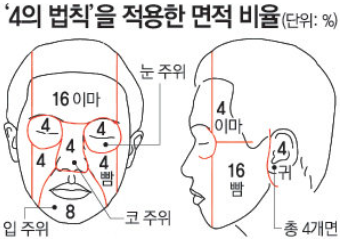
According to an anatomical study from Seoul National University’s Department of Dermatology, the average facial surface area of a Korean woman is 404.4 cm². The primary target zones for Ultherapy—the cheeks—comprise approximately 40% of the bilateral facial surface area. When adding the submental zone (under the chin), it covers soccer 48%, and extending the treatment to the temporal region brings the total target area to approximately 50%.
- This establishes a standard target treatment area of roughly 20,000 mm².
- Since an Ultherapy line measures 25 mm in length and is delivered at a standard 1.5 mm spacing, the area covered by a single line is: 25 mm × 1.5 mm = 37.5 mm²
- To find the total required line count to blanket this target area uniformly, we divide the total surface area by the single-line coverage area: 20,000 mm² / 37.5 mm² = 533.3 lines
This mathematically demonstrates why reputable clinics recommend a baseline of 500 to 600 lines for a full lower-face and submental treatment. It is a scientifically verified requirement.
5. How to Win the Tug-of-War: Designing Unbroken Vectors
Let us translate our “tug-of-war” analogy into clinical engineering. To win a tug-of-war:
- The focal points of force must be tightly spaced (Spacing).
- The pulling energy must be delivered without interruption (Connection).
- The direction of the pull must converge along a unified axis (Vector).
In Ultherapy, these rules correspond directly to:
- Focal points of force = Thermal Coagulation Points (TCPs)
- Uninterrupted connection = A tight, line-to-line grid mapping
- Direction of pull (Vector) = Individualized vector design (line orientation and distribution)
The lifting vector must be meticulously customized for each patient, typically opposing the force of gravity or directed laterally away from hypertrophied fat compartments. Consequently, an elite Ultherapy result requires a precise manual technique to seamlessly interlock lines, paired with the diagnostic sophistication to map out the exact target depths and direct the TCP sequences along customized lifting vectors.
6. The TERRA Edge: 5 Clinical Protocols that Define Our Results
- Detail 1. Real-Time Depth Synchronization: One of Ultherapy’s premier advantages is real-time ultrasound visualization. This allows us to map the precise tissue layers before firing. If the targeting depth is misaligned, even a high line count will fail. Choosing where to deploy the energy takes absolute precedence over raw line numbers.
- Detail 2. Maximizing Micro-TCP Precision: The microscopic size of a TCP is an immense clinical advantage, allowing us to build a highly intricate structural matrix. However, it demands extreme technical precision. Spacing lines too sparsely completely undermines the engineered lifting mechanism.
- Detail 3. Adapting the 1.5 mm Standard: The standard 1.5 mm spacing is the golden baseline engineered to form continuous tissue contraction. However, we do not apply it blindly. We micro-adjust settings based on real-time feedback, skin thickness, subcutaneous fat distribution, and underlying nerve pathways to balance safety with maximum therapeutic yield.
- Detail 4. Re-defining ‘Adequate Lines’ through Density: We shift the conversation away from raw commercialized line numbers. What matters is ensuring the specific target zones receive a saturation of energy based on your unique facial dimensions.
- Detail 5. Unbroken Vector Engineering: Recontouring sagging jawlines, jowls, and submental tissue is essentially a process of relocating tissue structures upward against gravity. If a treatment line breaks or lacks direction, the vector leaks energy. Our blueprint focuses intensely on connectivity, directionality, and multi-layered depth alignment.
Conclusion: A Tight Grid and Unbroken Vectors Make Ultherapy Truly Effective
In summary, Ultherapy relies on creating microscopic TCPs utilizing a foundational 1.5 mm standard spacing. Peer-reviewed clinical literature confirms that line density and structural continuity are the absolute drivers of premium outcomes.
Achieving a flawless result means mastering the effective width of every single line, interlocking them along ideal spacing parameters, engineering a customized density profile, and executing unbroken vector pathways.
Thank you for reading. This has been Dongju Hyun, M.D.