hello Dongju Hyun, MDis the value.
Even after the acne has cleared up, the
Red marks, brown marks, and bumpy scars This can make you nervous every time you look in the mirror.
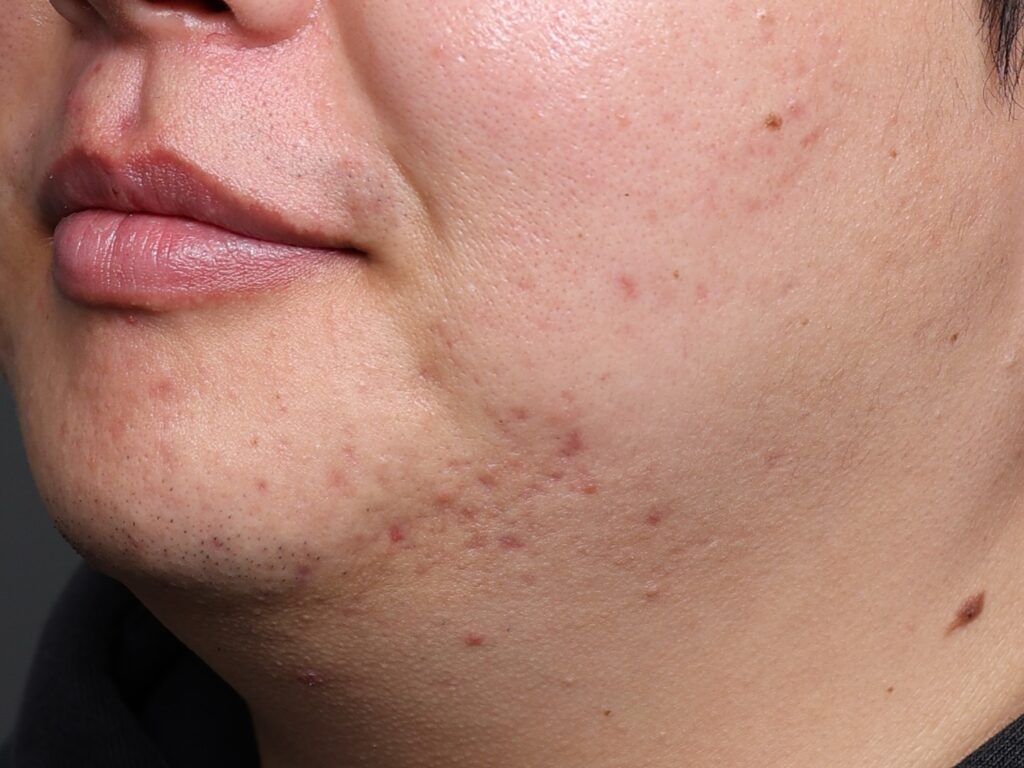
The problem is that the different states are not all ‘Acne scars’ and call
The problem is that we often try to manage and cure in the same way, and it doesn't work as well as we hoped.
In reality, acne marks and pitting scars vary in depth, healing potential, and approach.
Today at Therapy Department Gangnam
The marks left on the skin after acne “Red marks - pigmentation - pitted scars” Let's boil it down to three things.
1. red marks (post-inflammatory erythema)
After the acne inflammation has subsided
The red or pink marks that remain in their place are called post-inflammatory erythema (PIE).
- A condition in which capillaries are dilated, causing a reddish glow in the skin.
- If you touch it, it's relatively smooth and, it doesn't have much of a punch.
- It can fade over time, but can last a long time if you keep stimulating it.
This step is more of a “finished scar”,
It's more of a vascularized change that occurs during recovery from inflammation.
It usually lasts 3-6 months.
2. hyperpigmentation (post-inflammatory pigmentation)
Over time, the reddish marks will become
A brown, tan, or black appearance is called post-inflammatory hyperpigmentation (PIH).
- While they may look like blemishes or spots on the outside, the starting point is often acne inflammation.
- To the touch, the surface of the skin is flat, which is different from a pitted scar.
- Exposure to UV light can cause them to darken, and depending on your skin tone, they may be more noticeable.
Hyperpigmentation is reported to be a very common comorbidity in acne patients,
In some cases, it can last for a year or more, so sun protection and irritation management are important.
3. puncture marks (acne scars)
A pitted acne scar isn't just a colored mark,
The skin structure itself has changed.
- Strong inflammation invades deep into the dermis, damaging collagenous tissue.
- If the damaged area doesn't regenerate enough, you'll end up with a lumpy, atrophic scar that looks lower than the surrounding area.
- Shadows appear more pronounced when light hits them from the side, and they tend to change shape less over time.
Studies have shown that this scarring is observed in a significant percentage of acne patients,
In particular, the more severe the acne, the longer the inflammatory response lasts, the higher the risk of scarring.
Marks don't always lead to scars
Just because you have red marks or pigmentation doesn't mean you can't use the
Not all of them go on to become gaping scars.
However, in the following cases
This can delay skin healing or increase the likelihood of scarring.
- Repeated hand squeezing or vigorous extrusion of a highly inflamed pimple.
- UV rays, friction, irritating cosmetics and exfoliation during the recovery process.
- Overall skin regeneration is poor and treatment has been delayed.
Studies have also reported that moderate to severe acne is associated with a significantly higher risk of scarring,
Emphasize the importance of starting proper care and treatment before the inflammation becomes severe.
Different states should have different management directions
Remove all traces of post-acne
“You don't have to think, ”I have to get rid of it with a strong procedure.".
It's a good idea to segment your strategy based on your current state.
- Red marks - pigmentation
- Digging scars
At Therapy Department Gangnam
First, determine if your current skin condition is mark-driven, hyperpigmented, or accompanied by deep scarring.
Your treatment is tailored to your individual skin's stage of recovery.
Wrapping up
Just because your acne is gone doesn't mean that
After that, any remaining changes will all be in the same “Acne scars”is not.
- Is what you're seeing a red mark?
- Brown-black pigmentation left behind
- Is there an actual pitted scar?
Even with just these three distinctions
You'll have a much clearer idea of how to plan your care and treatment going forward.
Rather than trying to figure out your own Know exactly where you standis important.
If you are curious about your current skin condition, we recommend that you visit Therapy Clinic Gangnam to get an accurate diagnosis and discuss a realistic care plan for your skin.